IX Energy – Driving the Transition Through EV Conversions” — International Council for Circular Economy

IX Energy Private Limited, providing innovative electric mobility solutions through electric conversion kits, EV-as-a-service, and EV components. By reusing existing internal combustion engine (ICE) vehicles and converting them to hybrid or fully electric vehicles, IX energy makes the shift to sustainable transport more affordable and scalable.”

Their flagship products include:

  • ⚡ Electric Synergy Drive (ESD) – A retrofit system that converts ICE buses or trucks into hybrid-electric vehicles, improving fuel economy by up to 25% without requiring charging infrastructure.
  • 🔋 Electric Energy Drive (EED) – A retrofit solution that transforms ICE buses and trucks into fully electric vehicles by replacing engines and auxiliaries with advanced electric powertrains.

Beyond products, they offer customized retrofit kits for special-purpose vehiclesEV-as-a-service (rental)consulting and engineering services, and telematics solutions tailored to industry needs.


The Problem

Adoption of electric vehicles (EVs) in the commercial sector faces multiple barriers:

  • 🚛 High Replacement Costs: Scrapping older vehicles and purchasing new EVs requires significant capital investment.
  • ⚡ Infrastructure Challenges: Lack of adequate charging stations limits adoption.
  • 🛠️ One-size-fits-all Limitations: Many fleet operators need customized solutions for unique demands.
  • 🌍 Carbon Emissions: In-use ICE vehicles contribute heavily to air pollution and greenhouse gas emissions.

IX Energy provides an affordable, scalable, and circular solution by reusing existing vehicle structures and upgrading them with electric drivetrains — cutting both costs and emissions.


Circular Economy Alignment

IX Energy strongly aligns with circular economy principles by extending the lifecycle of vehicles rather than promoting scrappage and new manufacturing:

  • 🔄 Reuse Over Replace: Retrofits give a second life to trucks and buses, avoiding waste and reducing demand for raw materials.
  • 🌱 Emission Savings:
    • Manufacturing a medium truck (3.5 tons tare weight) emits ~11 tons of CO₂.
    • By retrofitting instead of manufacturing new, IX Energy saves ~11 tons of carbon per vehicle.
  • ♻️ Material Efficiency: Avoids scrapping 3+ tons of reusable steel and rubber per vehicle, preventing waste and unnecessary recycling emissions.
  • ⚡ Operational Carbon Cuts: ESD improves in-use fuel economy by up to 25%, while EED eliminates tailpipe emissions entirely.

This model exemplifies how reusing existing assets reduces resource strain, mitigates emissions, and accelerates the clean mobility transition.

Impact

🌍 Environmental Impact

  • Saved ~11 tons of CO₂ emissions per truck by avoiding new manufacturing.
  • Reduced tailpipe emissions from retrofitted vehicles.
  • Minimized landfill waste from scrapped vehicles.

👷 Social Impact

  • Created jobs in retrofit services, EV engineering, and after-sales support.
  • Supported skill development and workforce training in new EV technologies.

🏭 Economic Impact

  • Made EV adoption more affordable for fleet operators.
  • Reduced operational costs for transport companies via improved fuel efficiency and reduced maintenance.
  • Offered scalable EV-as-a-service and customized consulting to expand adoption across transport sectors.

IX Energy Private Limited showcases how circular innovation can accelerate clean mobility. By converting existing vehicles instead of scrapping them, IX Energy reduces costs, avoids unnecessary emissions, and creates jobs. Its solutions bridge the gap between today’s infrastructure challenges and tomorrow’s clean transport future.

Through its retrofit-first approach, IX Energy is not only cutting carbon but also proving that India can scale EV adoption sustainably and inclusively.

Contact Information

Founder: Anshu Dewan
Company: IX Energy Private Limited
Address: 7361/A, Ramnagar, Qutub Road, Paharganj, New Delhi – 110055
Email: anshu@ixenergy.in
Phone: +91 98100 39125 / +91 95828 11511
Website: www.ixenergy.in

Retrofitting Revolution: Re-powering India’s Truck Fleet” — All India EV

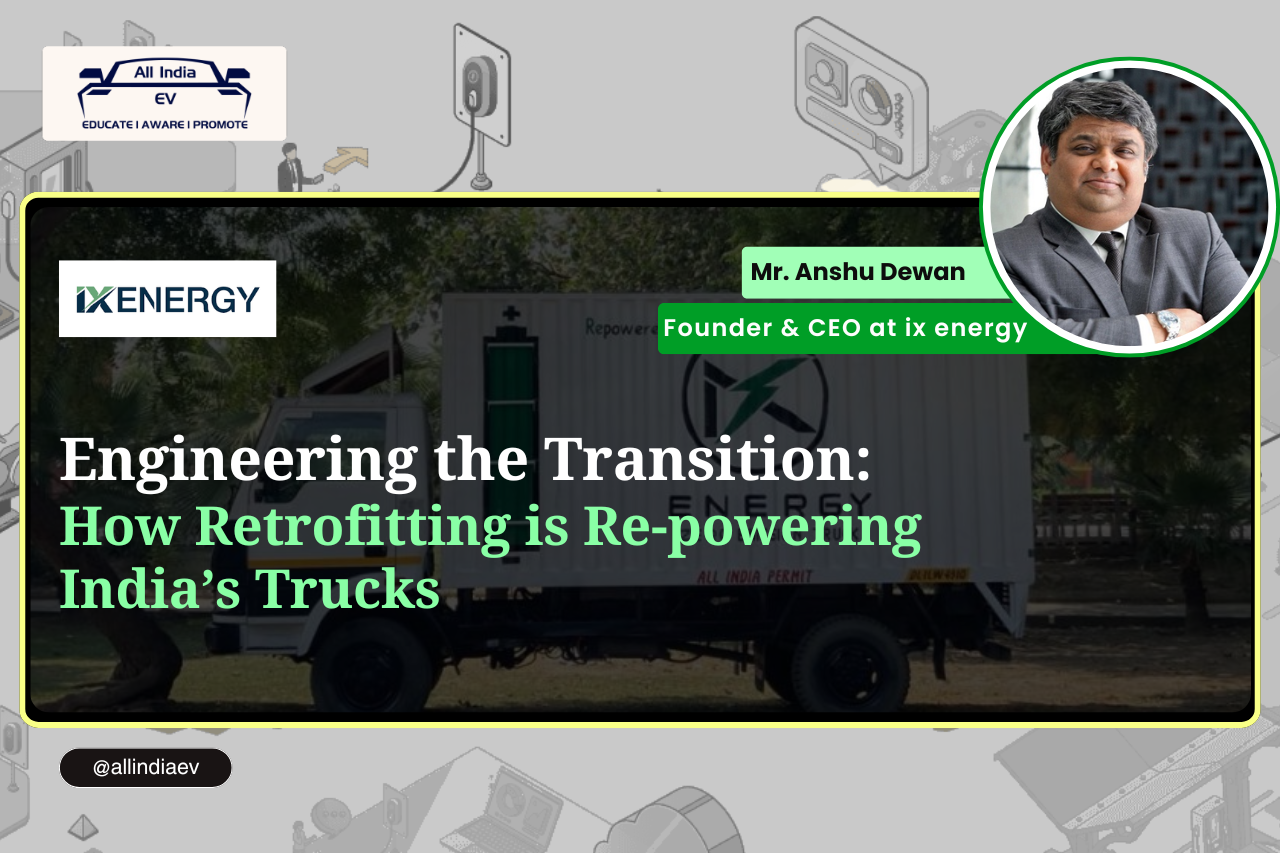
Engineering the Transition: How Retrofitting is Re-powering India’s Trucks

India’s journey toward sustainable mobility isn’t just about new EVs, it’s equally about transforming what’s already on the road.

At iX Energy, we believe truck retrofitting is a uniquely Indian innovation imperative. It’s where deep-tech engineering meets grassroots impact.

Unlike new EVs, retrofits must work within the constraints of existing chassis and load-bearing designs.

At iX Energy, we custom-design battery packs (typically LFP chemistry) that are crash- safe, modular, and optimized for underbody or behind- cabin mounting—without compromising payload or vehicle balance.

Powertrain Integration

The retrofit process involves replacing the ICE drivetrain with an electric motor (typically PMSM or BLDC), power electronics, and a single-speed transmission. We engineer torque curves that match the performance needs of urban logistics and intra- city freight.

Retention of original differential and suspension ensures cost efficiency and rapid deployment.

Our retrofit kits include an integrated telematics unit with real-time monitoring of SoC, vehicle health, location, and trip diagnostics. This not only improves operational visibility but also lays the groundwork for energy-efficient route planning and predictive maintenance.

Each of our retrofitted models undergoes a rigorous certification process via ARAI/ICAT, ensuring full compliance with CMVR and AIS-123 Part 3 norms.

Importantly, converted EVs are tested under the same protocols as new electric vehicles—including assessments for electrical safety, electromagnetic compatibility, thermal performance, and structural integrity.

This equivalence in testing underscores a critical point: retrofit EVs, when properly engineered and certified, are just as safe and reliable as factory-built EVs.

At iX Energy, we see this not only as a regulatory requirement, but as a design benchmark.

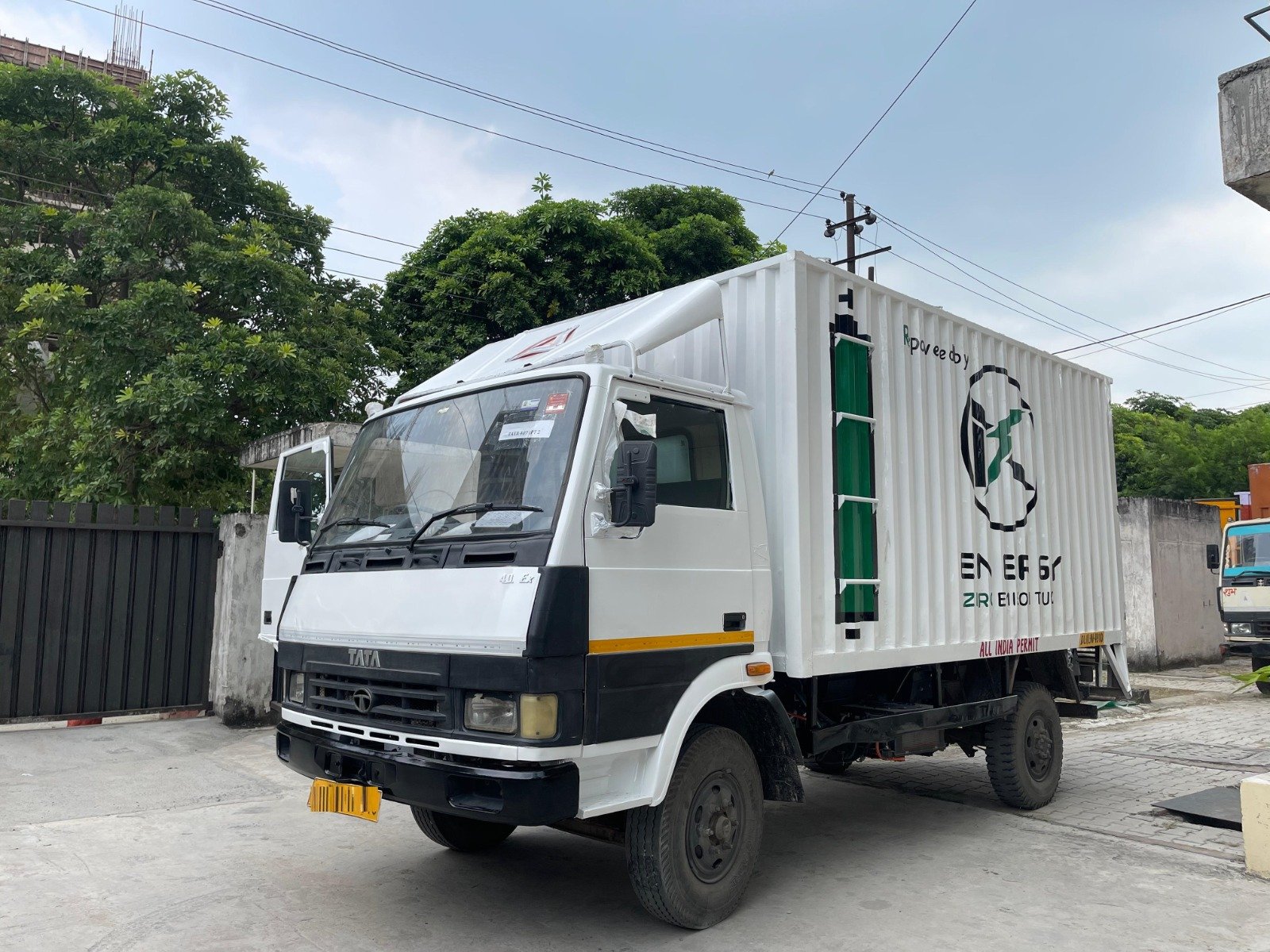
Working within the envelope of legacy diesel trucks— particularly LCVs like Tata 407, Eicher Pro series, and Mahindra Supro—means tight packaging, thermal management challenges, and variable wiring harnesses.

Our engineering teams have developed adaptable retrofit frameworks that reduce integration time from 60 to 25 days. Retrofitting isn’t just a lower-cost EV—it’s a leap in applied engineering, where each vehicle becomes a customized platform for sustainable transport.

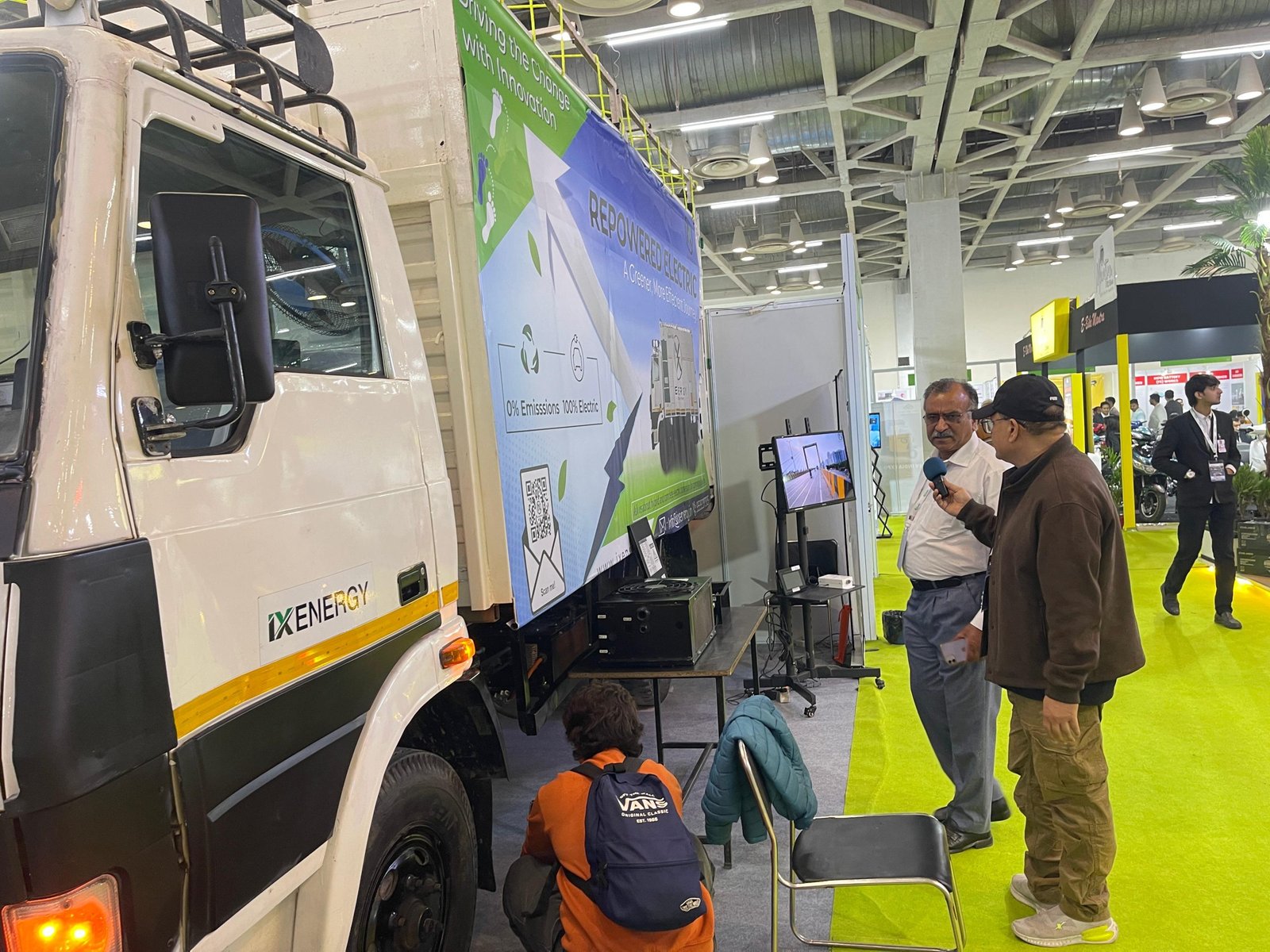
🚀 India EV Expo 2024: Driving Innovation and Shaping the Future of Mobility

IX Energy at India EV Expo 2024: A Leap Toward Sustainable Mobility

The India EV Expo 2024, held from November 19 to 21, proved to be an exceptional experience for IX Energy. This prestigious event served as a vibrant platform to showcase our expertise, share groundbreaking ideas, and create meaningful connections with key players in the electric vehicle (EV) industry. With an unwavering commitment to revolutionizing transportation, we were thrilled to be part of such a transformative gathering.

Engaging with Industry Leaders

Over the course of three exciting days, IX Energy engaged with an impressive array of industry leaders, including fleet operators 🛻, government officials 🏛️, technology innovators 💡, and passionate EV advocates ⚡. These interactions were not only enriching but also played a pivotal role in accelerating our mission towards sustainable mobility. Every conversation brought forth new perspectives and fresh ideas, fueling our drive to push the envelope in electric mobility solutions.

The India EV Expo provided an unparalleled opportunity to connect with like-minded professionals and organizations. These collaborations and discussions are driving us to innovate faster and more effectively, ensuring that we remain at the forefront of the electric vehicle revolution.

A Visionary Leadership: Mr. Manoj Agarwal

A key highlight of the expo was the active participation of our visionary Chief Operating Officer, Mr. Manoj Agarwal. As a thought leader in the EV space, Mr. Agarwal led impactful discussions on EV retrofitting solutions, an area in which IX Energy is making significant strides. His insights into the future of retrofitting, and his exploration of potential partnerships to advance industry standards, underscored IX Energy’s commitment to shaping the future of electric mobility.

Mr. Agarwal’s leadership and vision have been instrumental in driving IX Energy’s mission forward. His presence at the expo allowed us to establish valuable connections and explore transformative collaborations that will undoubtedly play a crucial role in the growth of the electric vehicle ecosystem.

A Bright Future Ahead

The India EV Expo 2024 has left us inspired and energized, reinforcing our resolve to continue innovating and expanding our reach into new markets. At IX Energy, we are more committed than ever to creating solutions that contribute to a greener, smarter, and more sustainable future for all. With the continued support of industry leaders, government officials, and technology innovators, we are excited to take bold strides toward shaping the future of transportation.

We are proud to be part of an ecosystem that is accelerating the transition to electric mobility. The journey ahead is filled with immense possibilities, and at IX Energy, we remain steadfast in our vision to drive change and create a cleaner, more sustainable world for generations to come.

Join Us on Our Journey

As we continue to make strides in the electric mobility space, we invite you to be a part of this transformative journey. Together, we can accelerate the adoption of electric vehicles, reduce carbon footprints, and build a future where sustainable transportation is the norm, not the exception.

Stay tuned for more updates from IX Energy as we continue our mission to revolutionize the transportation industry and make a positive impact on the planet. 🌍⚡

Retrofitting can be a better option than investing in new commercial vehicles’” — Autocar Professional

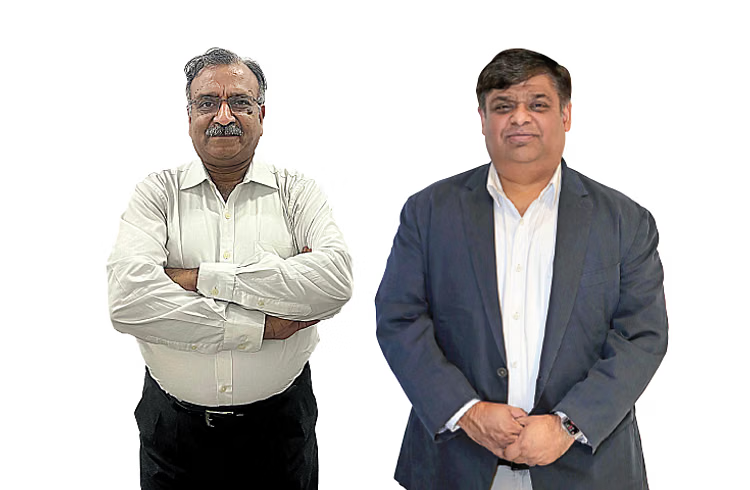
Mechanically sound old diesel vehicles can be given a second working life as a clean vehicle, by retrofitting them with electric or hybrid powertrains. Noida-based IX Energy specialises in retrofitting electric or hybrid vehicle electric kits which meet both regulations and environmental benchmarks. Anshu Dewan, Founder and CEO and MK Agrawal, COO spoke with Autocar Professional about the viability of the business and its likely market impact.

What’s the size of the refitting (hybridisation of Diesel/CNG) market in India for CVs?

Anshu Dewan: In India, the market is yet to realise its commercial potential and is currently at a nascent stage. As per the Transparency Market Research report, during 2021, around 975,000 vehicles inclusive of two-wheelers, three-wheelers, and four-wheelers underwent retro-fitment and the numbers are likely to increase to 2,200,000 units in 2026. The report also said that, the Indian EV Powertrain Retrofitment Market, which was worth USD 2.14 billion and is witnessing a CAGR of 13.27% for the next five years (2022-26) to reach USD 3.99 billion by 2026.

What are the key advantages of the conversion? Are the systems approved by the relevant authorities?

Anshu Dewan: Retrofitting can be a more economical option compared to purchasing new vehicles, especially for fleet operators or owners of older vehicles. It can also involve adding safety features or upgrading existing ones to enhance vehicle safety. This may include installing advanced driver assistance systems (ADAS) like lane departure warning, adaptive cruise control, or collision avoidance systems. Improved lighting, better braking systems, and structural reinforcements can also be part of safety-focused retrofitment efforts, enhancing overall vehicle safety and compliance with regulatory standards.

In 2023, IX Energy presented a retrofitted Tata LCV. How has the business picked up since then?

Anshu Dewan: We got the TA certificate in mid-December last year. Since then, we have done multiple trials. First one was with a government think-tank ISGF (India Smart Grip Foundation) in which we drove our converted electric truck from Farrukh Nagar to Chandigarh travelling almost 320 km one-way. The aim was to test the readiness of Delhi-Chandigarh freight corridors for its electrification. After that, we worked with companies like Exide Industries, DS Group, Nestle, Cremica among others. On 25 March 2024, we officially deployed our first truck to DS group – being our first traction in the market. We have targeted to deploy 24 trucks in Delhi NCR market.

How does the compulsory scrapping of commercial diesel vehicles after 15 years get impacted with retrofitting of electric systems?

MK Agrawal: Instead of scrapping entire vehicles, retrofitting enables the reuse and repurposing of existing vehicle chassis and components, minimising waste generation and landfill burden. We think the process also eliminates the need for manufacturing new vehicles, which entails carbon emissions associated with production processes, resource extraction, and transportation.

Where are the kits coming from? Are they imported or made in India?

MK Agrawal: For the kit assembly most of the components are made in India like Battery pack, HVPDU, telematic devices, and other related components. Only a few components are imported like motors and controllers.

What’s your current network and business plan for the next 3-5 years?

Anshu Dewan: Our target is for the mass conversion of existing diesel vehicles. For our ESD kit, we are working with State Road Transport Corporation like Telangana and Assam for converting their buses to hybrid. Telangana SRTC will be the first one for this. For EED, we want to focus first on the Delhi NCR market and then collaborate with entrepreneurs in other areas who will work with us as certified installer of our kits.

How does the new EV policy impact your business?

Anshu Dewan: There has not been much effect as retrofitting is not incentivised like new OE vehicles.
 

Why High Power Density Batteries Are Revolutionizing India’s Hybrid Bus Industry

Why High Power Density Batteries Are Revolutionizing India’s Hybrid Bus Industry

  1. Introduction
  2. The growing demand for high power density batteries in India’s hybrid bus industry
  3. The advantages of high power density batteries over traditional batteries
  4. The impact of high power density batteries on the performance and efficiency of hybrid buses
  5. The role of government policies in promoting the adoption of high power density batteries in the industry
  6. Conclusion: The future prospects and potential of high power density batteries in revolutionizing India’s hybrid bus industry.


  1. Introduction

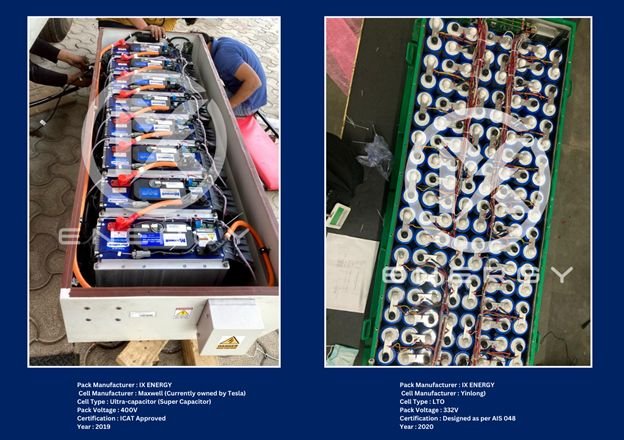
The transportation industry is constantly evolving, with a particular focus on finding more efficient and sustainable solutions. In recent years, India’s hybrid bus industry has seen a significant revolution, thanks to the development and implementation of high power density batteries. These advanced batteries, such as ultra capacitors and Li-ion batteries, offer higher energy storage and faster charging capabilities, making them ideal for hybrid buses. With their ability to deliver high power quickly (known as high c rate), these batteries are transforming the way hybrid buses operate in India. In this article, we will explore the key benefits and advancements of high power density batteries and their impact on India’s hybrid bus industry.

  1. The growing demand for high power density batteries in India’s hybrid bus industry

The increasing demand for high power density batteries in India’s hybrid bus industry is undeniable. As the transition towards cleaner and more sustainable transportation gains momentum, the need for efficient energy storage solutions becomes crucial. High power density batteries have proven to be a game-changer in this regard.

Furthermore, the adoption of high power density batteries has significant environmental benefits. By reducing reliance on fossil fuels and minimizing emissions, these batteries play a vital role in mitigating air pollution and improving the overall air quality.

In the next section, we will delve deeper into the specific features and advantages of high power density batteries and how they are transforming India’s hybrid bus industry. Stay tuned to learn more about this groundbreaking technology.

  1. The advantages of high power density batteries over traditional batteries

High power density batteries offer several significant advantages over traditional batteries, making them an ideal choice for India’s hybrid bus industry. Firstly, these batteries have a higher energy density, meaning they can deliver more power in a compact size. This allows for greater storage capacity, enabling hybrid buses to travel longer distances without the need for frequent recharging.

Secondly, high power density batteries have a faster charging rate compared to traditional batteries. This is crucial for the efficient operation of hybrid buses, as it minimizes downtime and ensures quick turnaround times between trips. Additionally, these batteries can withstand rapid charging without experiencing significant degradation, maintaining their performance and lifespan.

Furthermore, high power density batteries have a higher power output, enabling hybrid buses to achieve faster acceleration and better overall performance. This not only enhances the passenger experience but also improves the efficiency of the bus system as a whole.

  1. The impact of high power density batteries on the performance and efficiency of hybrid buses

With their higher energy density, these batteries provide hybrid buses with a much-needed boost in power. This enables them to achieve faster acceleration, making for a smoother and more enjoyable ride for passengers. Moreover, the improved power output allows these buses to tackle steep terrains and challenging routes with ease.

  1. The challenges faced in the implementation of high power density batteries in hybrid buses

One of the primary challenges is the initial high cost of high power density batteries. Although government incentives and subsidies help offset this cost, it still remains a significant barrier for many operators. In order to accelerate the adoption of these batteries, further research and development are needed to drive down the cost and make them more affordable.

The government needs to invest in the expansion of charging infrastructure across the country to support the growing number of hybrid buses on the road.

  1. Conclusion: The future prospects and potential of high power density batteries in revolutionizing India’s hybrid bus industry

As technology continues to advance, we can expect further improvements in the affordability, reliability, and longevity of high power density batteries. More charging stations will be established across the country, ensuring uninterrupted operations for hybrid buses. Skilled technicians will receive the necessary training and certifications to handle these batteries safely. These advancements will not only reduce maintenance costs but also increase confidence among bus operators and investors.

With ongoing innovation and dedication from industry stakeholders, high power density batteries will play a pivotal role in creating a cleaner and more efficient public transportation system in India. The next section will explore some of the innovative solutions currently being developed to address the challenges faced in the adoption of these batteries.


IX Energy transforms a Tata 407 LCV into an EV.” — CMV360

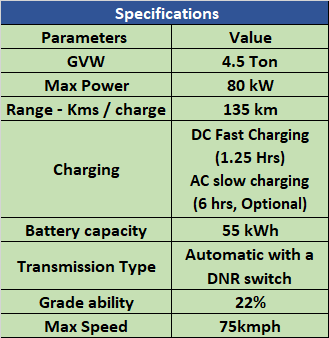
EV-converted Tata 407 has a range of 135 kilometers on a single charge and a top speed of 75 kilometers per hour.

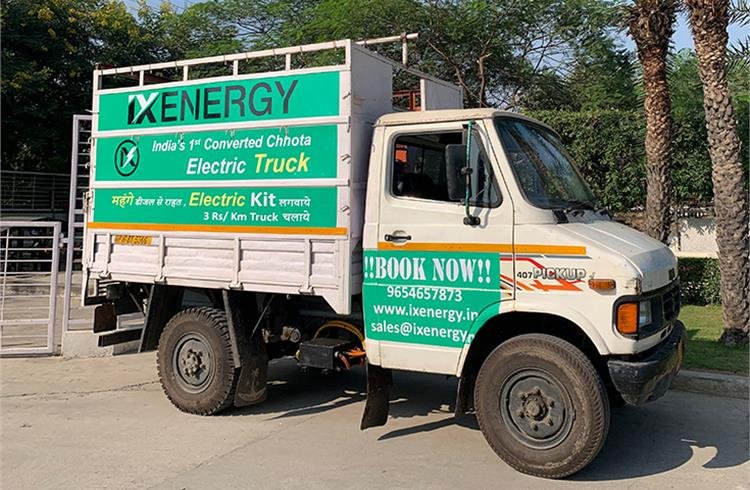
IX Energy, a sustainable energy firm, has developed a unique technology solution to turn the popular and dependable Tata 407 pickup into an EV while maintaining performance and ruggedness.

IX Energy has created an in-house EV conversion mechanism to ensure that the converted Tata 407 EV performs as well as its diesel-powered equivalent. This includes a powertrain, battery pack, cooling systems, user interface, telemetry system, and unique software to provide exceptional performance and safety.

iX Energy ensured that the original structure and dynamics of the vehicle were retained during the design and integration process, while replacing the engine and all engine-driven systems with their electric counterparts, such as the EV powertrain, brake system, and power steering.

According to the manufacturer, the EV-converted Tata 407 has a range of 135 kilometres on a single charge and a top speed of 75 kilometres per hour. At full payload, it can also climb grades of up to 22%.

A DC fast charger can charge the battery up to 80% in just one hour. Owners can also charge the vehicle at home or the office using an AC power source with onboard charging, but at a higher cost.

The converted Tata 407 also has an automatic transmission, which improves driving efficiency and comfort while minimizing driver fatigue in heavy traffic.

Key Features of Tata 407 LCV (EV)

  • Quick Charging
  • Gradeability The same as the Basic Vehicle.
  • Water and dustproof drive parts rated IP 67.
  • Battery cooling system that is advanced for safer operations and longer battery life.
  • Monitoring of the fleet in real-time.
  • Presence detection.
  • Reminder about maintenance.
  • Driver Score Monitoring.
  • Intelligent Regenerative Braking

Specifications of Tata 407 LCV (EV)

  • Gradeability: 22%
  • Max speed: 75kmph
  • GVW: 4.5 ton
  • Max power: 80 kw
  • Battery capacity: 55 kwh
  • Fuel type: Electric

About IX energy

IX Energy is a technology firm established in New Delhi, India that develops intelligent electric transportation solutions for India and the rest of the world. The goal of the firm is to be a global leader in the greener, smarter future of connected, autonomous, shared, and electric mobility.

Their objective is to make India’s freight and public transportation smarter by using Semi and Full Electric Trucks and Buses. They provide a smart, low-cost option for converting existing diesel/CNG vehicles to hybrid and fully electric vehicles.

iX Energy converts Tata 407 LCV into an EV

The move is aimed at catering to those Tata 407 owners who are looking for a shift towards a greener ecosystem.

iX Energy, a clean energy startup, has developed an innovative technology solution to convert the popular and reliable Tata 407 LCV into an EV without compromising on performance and robustness.

Key Features

  • Fast Charging
  • Gradeability Same as Base Vehicle.
  • IP 67 rated water and dust proof drive parts
  • Advanced battery cooling system for safer operations &
  • longer battery life
  • Real time fleet monitoring
  • Geofencing
  • Maintenance Reminder
  • Driver Score Tracking
  • Smart Regenerative Braking

To ensure that the converted Tata 407 EV performs just as well as its diesel-powered counterpart, iX Energy has developed an in-house EV conversion system. This includes a powertrain, battery pack, cooling systems, user interface, telematics system, and proprietary software to ensure great performance and safety. During the design and integration phase, iX Energy ensured that the original structure and dynamics of the vehicle were maintained while replacing the engine and all systems driven by the engine with their electric counterparts, such as the EV powertrain, brake system, and power steering.

As per a company statement, the EV-converted Tata 407 has a range of 135 km on a single charge and a maximum speed of 75 kmph. It can also climb grades of up to 22% at full payload. The battery can be charged up to 80% in just one hour using a DC fast charger. Alternatively, owners can choose to charge the vehicle at home or the office using an AC power supply with onboard charging, albeit at an additional cost.

The converted Tata 407 also comes with an automatic transmission to improve driving efficiency and comfort, reducing driver fatigue during congested traffic conditions.

IX Energy: An Indigenous Developer Of Low Cost EV Conversion Kits For Conventional Vehicles” — The Industry Outlook

The Low-Cost Technology Factor
IX Energy, strives to deliver real economic value to its customers. The Indian automobile market is driven by cost effectiveness. By incorporating frugal design and cost efficient technology, the company is creating significant economic value to this highly price sensitive sector. IX Energy is able to keep the costs low because it developed indigenous technology. That is the reason why IX Energy’s kits are in high demand. The company develops well engineered systems that go through multiple quality checks to ensure that customer don’t face loss of business due to breakdowns.

Speaking more on this, Founder & Managing Director of the firm, Anshu Dewan, says, “Low cost and high quality are essential for success in this business. We have developed an extensive set of quality checkpoints that start from the time of design and extend till the pre-delivery of the products. Our firm is customer-centric and we will strive to maintain our philosophy regardless of the repercussions.

We have developed an extensive set of quality checkpoints that start from the time of design and extend till the pre-delivery of the products. Our firm is customercentric and we will strive to maintain our philosophy regardless of the repercussions


Anshu Dewan //Founder & Managing Director


The journey of IX Energy has been long and full of learnings. “With over 2 years in R&D – we have learnt the minor aspects of design and technology that can have major real word consequences”, says Anshu Dewan. Since the concept of installing a battery and electric power train was new in the Indian market, it was not accepted by most people. So the growth was tepid in the initial stage, but with the acceptance of EV technology, multiple projects are lined up and IX Energy is poised for significant growth including projects in Assam and Gujarat. “Decisively, our firm is striving to electrify transportation and protect the environment from hazardous consequences,” concludes Anshu Dewan.

The Indian automobile industry is the world’s fifth largest industry. Following the introduction of electric vehicles, it has continued to emerge as one of the top markets. The rising cost of conventional fuel is expected to accelerate the growth of vehicle electrification. The government’s strict emission standards, as well as growing environmental awareness among Indian consumers, is expected to drive demand for electric vehicles. Along this vertical, an Uttar Pradesh based private firm named IX Energy provides potent electrical vehicles with a strong mission to disrupt India’s freight and public transport.

IX Energy is a technology company that builds intelligent electrical transport systems to global standards. This firm is helping in the making transportation of goods and people – more environmental friendly and sustainable. Hybrid vehicle kits and fully electric vehicle kits are the primary products of this firm. Sustainable, cost efficient economically viable, and in-house technology together give IX Energy an edge over other players.

The Low-Cost Technology Factor

The Indian automobile industry is the world’s fifth largest industry. Following the introduction of electric vehicles, it has continued to emerge as one of the top markets. The rising cost of conventional fuel is expected to accelerate the growth of vehicle electrification. The government’s strict emission standards, as well as growing environmental awareness among Indian consumers, is expected to drive demand for electric vehicles. Along this vertical, an Uttar Pradesh based private firm named IX Energy provides potent electrical vehicles with a strong mission to disrupt India’s freight and public transport.

IX Energy is a technology company that builds intelligent electrical transport systems to global standards. This firm is helping in the making transportation of goods and people – more environmental friendly and sustainable. Hybrid vehicle kits and fully electric vehicle kits are the primary products of this firm. Sustainable, cost efficient economically viable, and in-house technology together give IX Energy an edge over other players.

IX Energy, strives to deliver real economic value to its customers. The Indian automobile market is driven by cost effectiveness. By incorporating frugal design and cost efficient technology, the company is creating significant economic value to this highly price sensitive sector. IX Energy is able to keep the costs low because it developed indigenous technology. That is the reason why IX Energy’s kits are in high demand. The company develops well engineered systems that go through multiple quality checks to ensure that customer don’t face loss of business due to breakdowns.

Speaking more on this, Founder & Managing Director of the firm, Anshu Dewan, says, “Low cost and high quality are essential for success in this business. We have developed an extensive set of quality checkpoints that start from the time of design and extend till the pre-delivery of the products. Our firm is customer-centric and we will strive to maintain our philosophy regardless of the repercussions.

We have developed an extensive set of quality checkpoints that start from the time of design and extend till the pre-delivery of the products. Our firm is customer centric and we will strive to maintain our philosophy regardless of the repercussions.

The journey of IX Energy has been long and full of learnings. “With over 2 years in R&D – we have learnt the minor aspects of design and technology that can have major real word consequences”, says Anshu Dewan. Since the concept of installing a battery and electric power train was new in the Indian market, it was not accepted by most people. So the growth was tepid in the initial stage, but with the acceptance of EV technology, multiple projects are lined up and IX Energy is poised for significant growth including projects in Assam and Gujarat. “Decisively, our firm is striving to electrify transportation and protect the environment from hazardous consequences,” concludes Anshu Dewan.